LABPARK Introduces Five Modular Teaching Platforms for the 64th China Higher Education Expo
Originally published by LABPARK on 2026-05-18. English edition published on November 3, 2026.
Originally announced on May 18, 2026, this product preview introduced five LABPARK platforms for the 64th China Higher Education Expo. The exhibition was scheduled for May 22–24, 2026, at Nanchang Greenland International Expo Center, with LABPARK at Hall A2, Booth A2E11. The invitation below is presented as an archive of that announcement.
Universities face limited laboratory space, compressed experimental teaching hours and growing expectations for teaching and research. In response, LABPARK developed an expandable equipment system combining platform-based, modular and intelligent design with provisions for AI integration.
The platforms address practical teaching, research and production-related practice. Their expandable intelligent control architecture covers thermodynamics, kinetics and core chemical engineering unit operations, supporting a move from individual-purpose equipment toward integrated intelligent laboratories. The expo announcement offered physical demonstrations and technical explanations of structure, functions, teaching applications and research extensions.
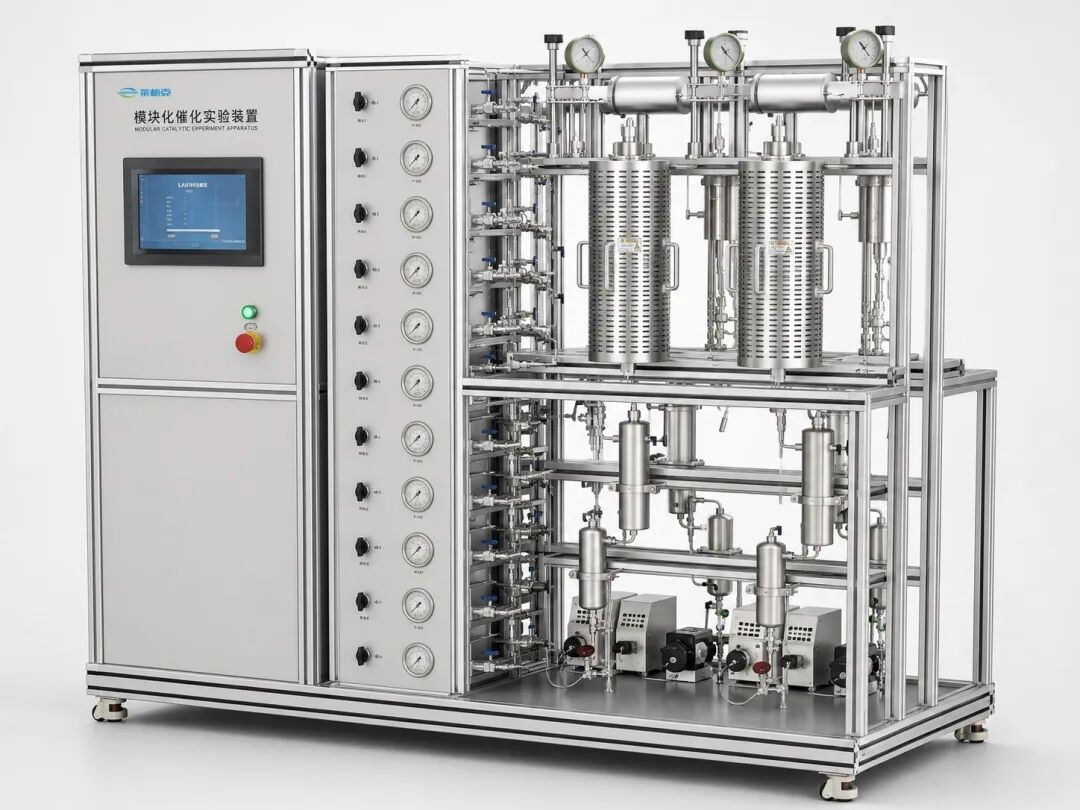
1. Modular catalytic reaction platform
A quick-change reactor structure allows different reactor types to be installed on one platform, supporting a range of catalytic reaction systems and improving equipment versatility.
The apparatus can accommodate four independently operated reaction groups for parallel comparison, helping reduce the time required for catalyst screening and exploration of process conditions. This enables a move from sequential experiments toward parallel, higher-throughput work.
Standardized AI control points are reserved in the hardware, while the software can interface with higher-level intelligent algorithms. These provisions establish a basis for future AI-guided control, data-driven optimization and intelligent catalytic evaluation; they should not be read as a claim that every such function is already deployed.
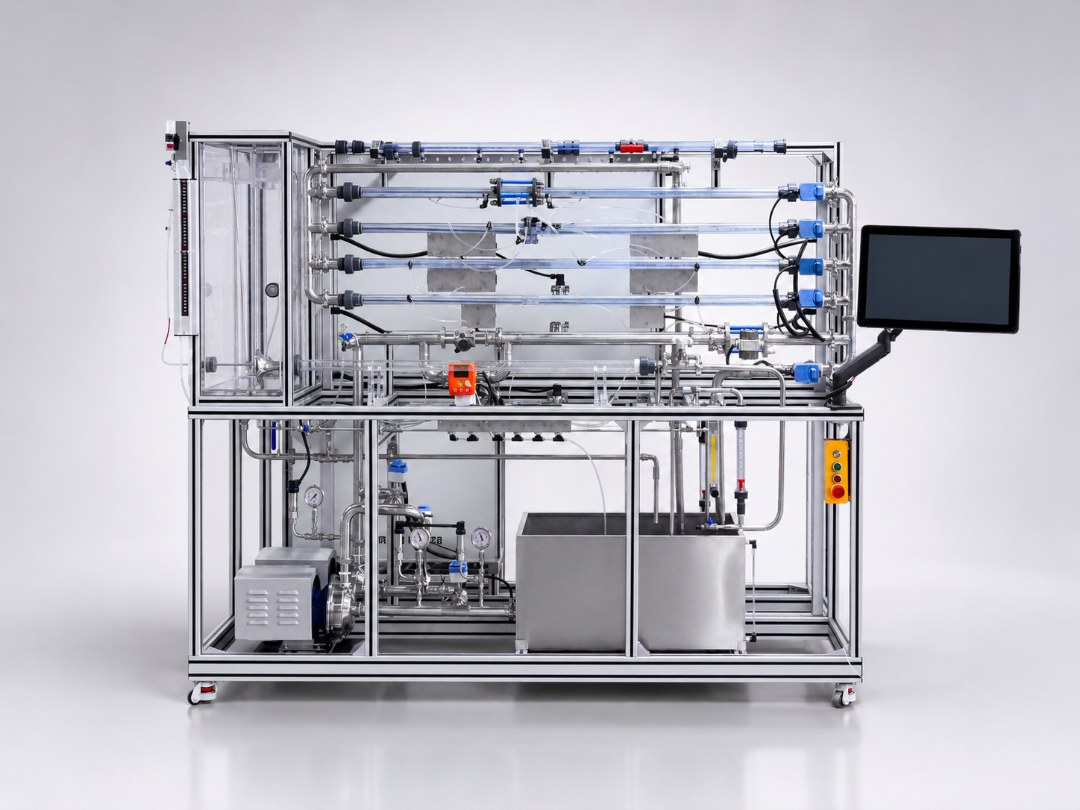
2. Integrated fluid mechanics platform
The fluid mechanics platform combines six core experiments used in university teaching. Its modular construction allows pipes and experimental components to be removed or replaced quickly, including straight pipes, reducers and flowmeters. A spare-pipe storage rack keeps components organized and supports continuity between experiments.
Valves support both manual and automatic operation, allowing hands-on introductory teaching as well as precise automated adjustment. The system also accommodates remote control logic for parameter settings, changes in operating conditions and monitoring.
3. Absorption and desorption platform
Supporting both physical and chemical absorption, this platform serves experiments in chemical engineering, environmental engineering and energy-related programs.
Packed, sieve-tray and high-gravity columns can be exchanged, allowing different modules and process configurations to support teaching, research and innovative experiments. Automated parameter control, real-time monitoring, automatic data acquisition, background storage and historical data retrieval support current use and future intelligent upgrades.
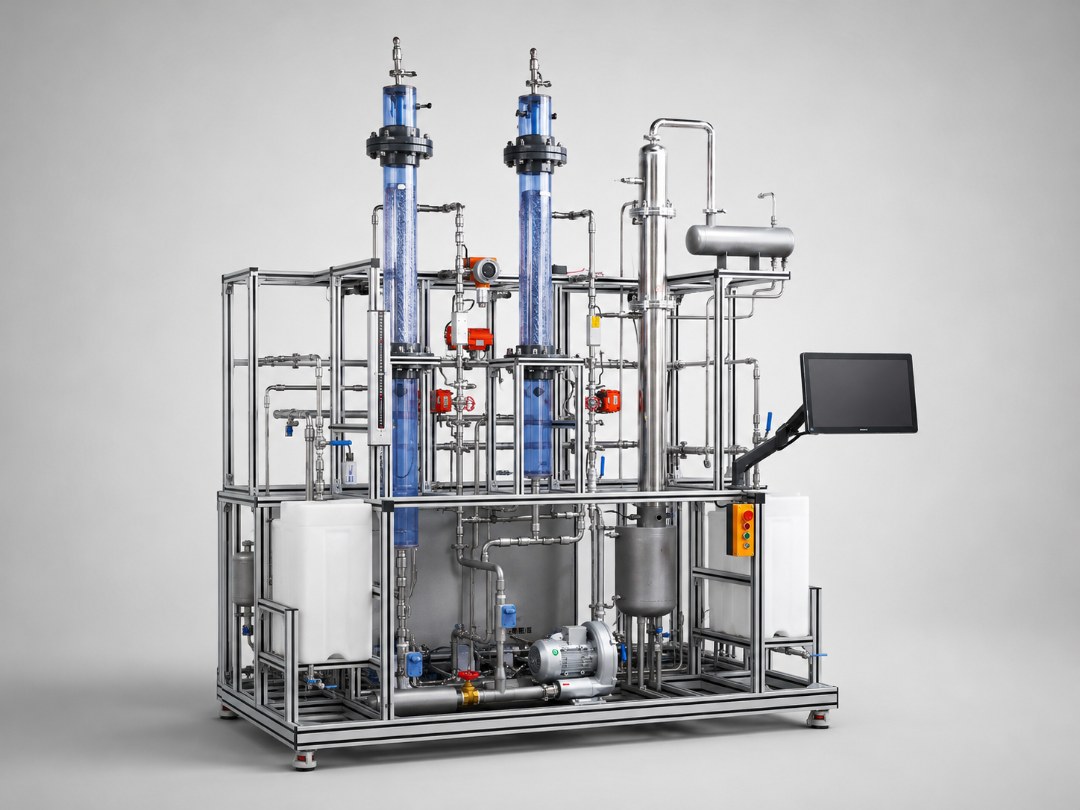
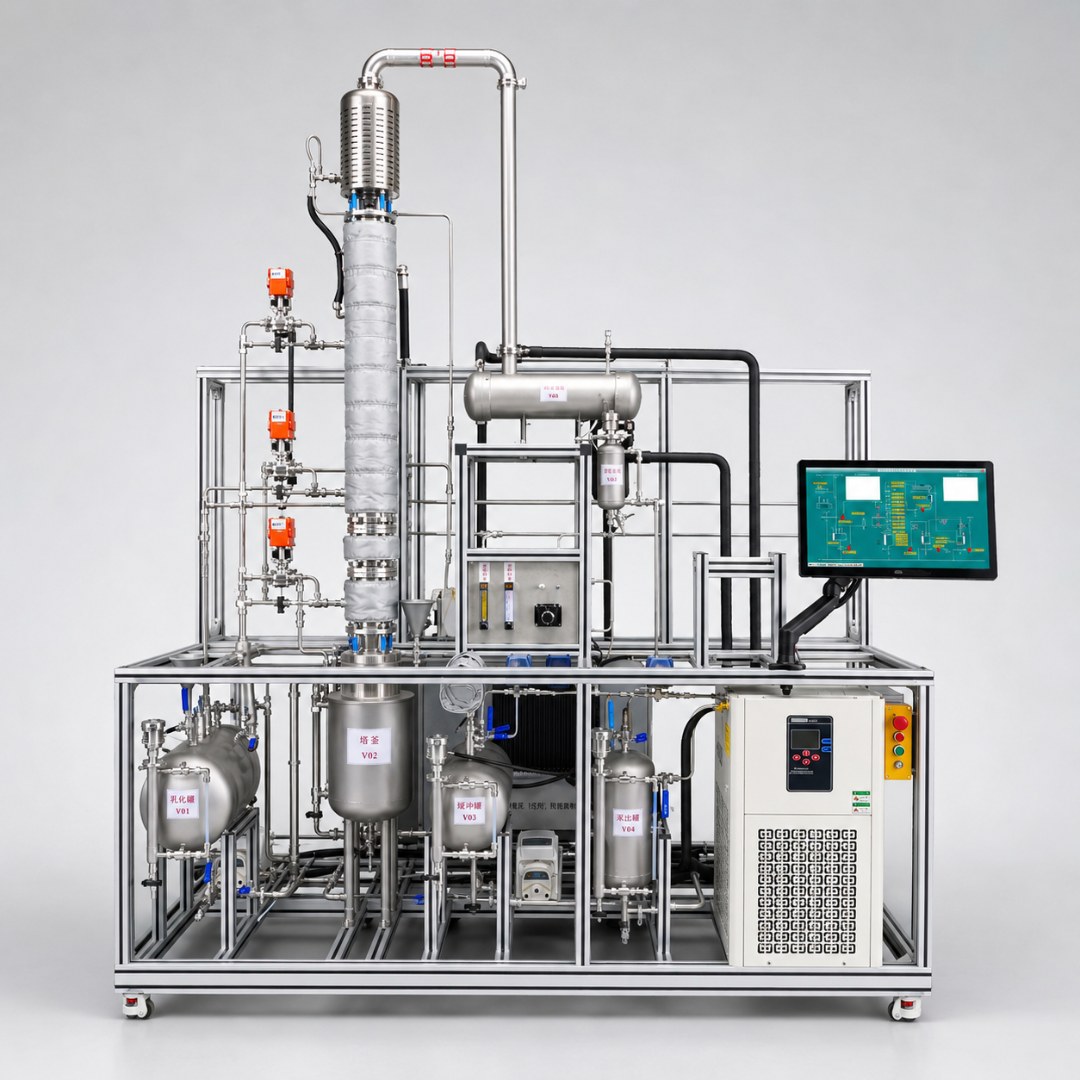
4. Distillation platform
Designed for unit operations training, production practice and small- and pilot-scale research, the distillation platform uses a removable, modular column. Tray type and number, packed or tray configurations, and column height can be adjusted without replacing the complete apparatus. Changing the feed column section allows a rapid transition to extractive distillation.
Temperature-resistant seals and individually replaceable components help reduce maintenance requirements. Local manual assembly and disassembly, together with remote control, support students’ engineering thinking and teamwork.
5. Heat transfer platform
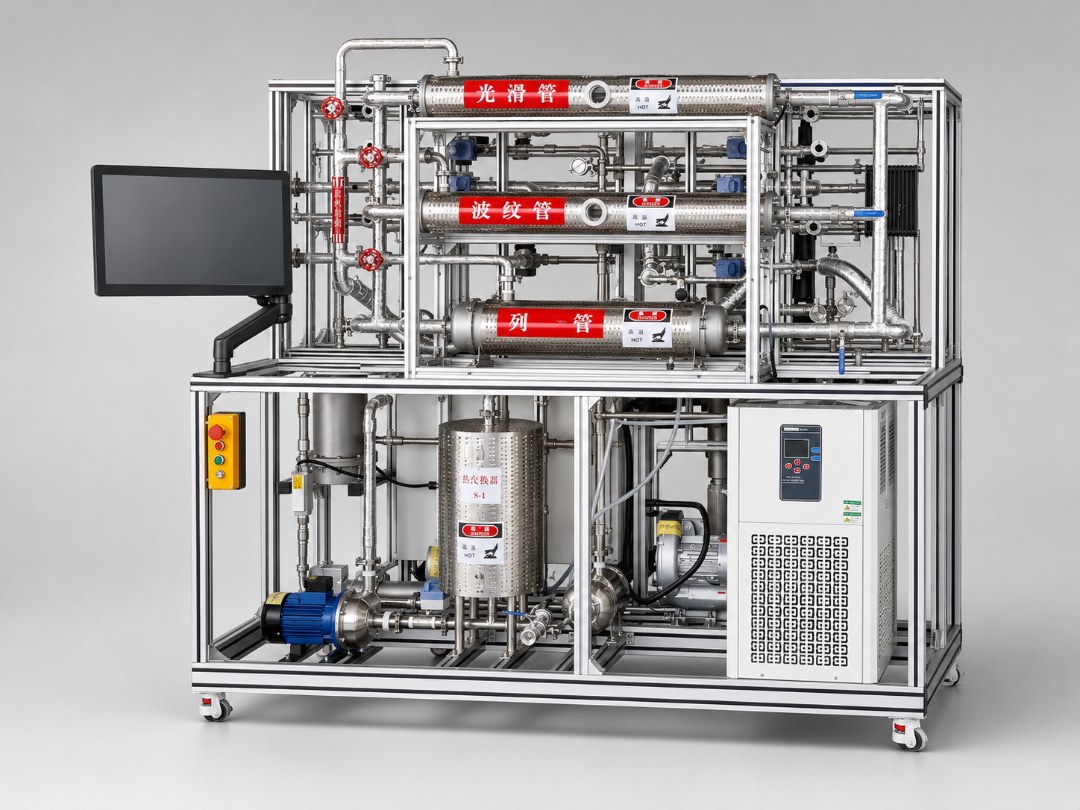
The heat transfer platform integrates a steam generator, an air heater and a low-temperature thermostatic bath. It supports steam–cold air, hot air–cold air and hot water–cold water systems, covering multiple teaching and research scenarios.
Standardized quick-release connections allow double-pipe, plate and shell-and-tube heat exchangers to be exchanged without rebuilding the entire apparatus. Experiments can investigate heat transfer coefficients, compare enhancement methods and assess the influence of heat transfer area.
Technical discussions and laboratory planning
The original announcement invited university specialists and industry users to arrange demonstrations with LABPARK’s technical team at the expo. For current product information and laboratory planning discussions, please contact LABPARK through the website.
About LABPARK
LABPARK is a high-tech enterprise providing chemical engineering experimental equipment and complete laboratory solutions to universities, research institutes and companies. It has served higher education in China for more than two decades across chemistry, chemical engineering, biology, food, pharmaceuticals and environmental fields.
The company has established an engineering technology research center for chemical engineering practical education equipment and an industrial design center. Its recognitions include provincial specialized and innovative enterprise and service-oriented manufacturing demonstration enterprise status, alongside provincial intellectual property, technology growth and innovation designations and national technology enterprise recognition.
At the time of the original report, LABPARK reported 206 technical patents and service to more than 300 organizations. It had participated in 243 Ministry of Education industry–university collaborative education projects: 49 in teaching content and curriculum reform, 185 in faculty training and nine in practical teaching conditions and training base development.
LABPARK’s Future Collaborative Innovation Research Institute works with users through a shared innovation service platform. Its activities draw on intelligent technologies, chemical process intensification, the Internet of Things and digital twins to explore application models and cooperation mechanisms. Joint work in teaching, research and industrial applications emphasizes complementary expertise, shared resources and technology transfer, with safety, environmental protection, energy efficiency and effective operation as guiding priorities.
Explore LABPARK laboratory equipment or contact our team to discuss your teaching and research requirements.
Source: LABPARK official WeChat article (Chinese). Translated and edited for the English website; event dates and figures reflect the original report.